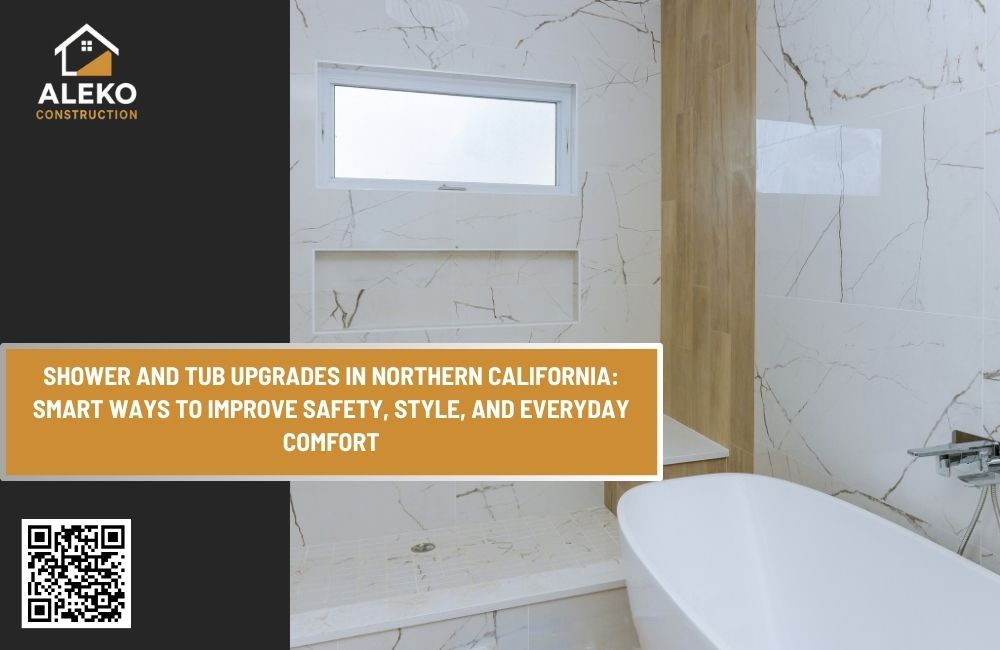
Shower and Tub Upgrades in Northern California: Smart Ways to Improve Safety, Style, and Everyday Comfort
A shower or bathtub should do more than fill a corner of the bathroom. It should feel comfortable, be easy to use, support your household’s needs, and help reduce the risk of slips, leaks, and daily frustration.
For homeowners across Sacramento and Northern California, thoughtful Shower and Tub Upgrades can improve both the look and performance of a bathroom. Whether you are replacing an outdated tub, converting to a walk-in shower, or planning a complete renovation, the best results come from combining practical design with proper waterproofing, drainage, plumbing, and installation.
Aleko Construction helps homeowners create bathing spaces that are safer, easier to maintain, and better suited to everyday life.
What Are the Best Shower and Tub Upgrades for a Home?
The right upgrade depends on who uses the bathroom, how much space is available, and what problems need to be solved.
Common options include:
Tub-to-shower conversions
Shower-to-tub conversions
Custom walk-in showers
Walk-in tubs
Frameless glass shower doors
Built-in shower niches
Handheld showerheads
Low-threshold shower entries
Slip-resistant flooring
Updated plumbing fixtures
Steam shower installation
For many Northern California homeowners, the most valuable improvements are those that combine comfort, accessibility, water control, and low-maintenance materials.
Start With How Your Household Uses the Bathroom
Before choosing tile or fixtures, consider how the bathroom functions every day.
A family with young children may still need a bathtub. An older homeowner may prefer a low-entry shower or walk-in tub. A busy household may benefit from more storage, easier-to-clean surfaces, and durable fixtures.
Questions to Ask Before Remodeling
A practical Bathroom Design and Planning process should answer:
Who uses the bathroom most often?
Is the current tub or shower difficult to enter?
Are there signs of leaks or water damage?
Is the bathing area too small or poorly arranged?
Would additional storage improve daily use?
Is accessibility important now or in the future?
Does the plumbing need to be updated?
Is ventilation strong enough for the space?
Clear answers help prevent design choices that look good but do not work well for the people using the room.
Convert an Old Tub Into a Walk-In Shower
A tub-to-shower conversion is a popular choice for homeowners who rarely use a bathtub or want easier access.
A well-designed walk-in shower can make the bathroom feel more open while providing more comfortable movement.
Benefits of a Walk-In Shower
A walk-in shower may offer:
Easier entry and exit
More usable standing space
Flexible showerhead placement
Built-in seating options
Better storage through niches or shelves
A modern, streamlined appearance
Improved accessibility
For safer use, consider a low threshold, grab bars, non-slip tile, and a handheld shower wand.
The project should also include professional waterproofing, an appropriately sloped shower pan, and a drainage system designed for the new layout.
Consider Walk-In Tub Installation for Added Safety
A traditional bathtub can become difficult to use when stepping over a high wall is uncomfortable or unsafe.
Professional Walk In Tub Installation can provide a lower entry point, built-in seating, and supportive features for homeowners with limited mobility.
Walk-in tubs may be helpful for:
Older adults
People with balance concerns
Homeowners recovering from injuries
Multigenerational households
Those planning to age in place
Because these tubs have specific plumbing, drainage, electrical, and space requirements, careful planning is important before installation.
Upgrade the Shower Without Rebuilding the Entire Bathroom
Not every project requires a complete renovation. A focused shower update can improve comfort and appearance while preserving parts of the existing bathroom.
Useful upgrades may include:
Replacing an outdated shower door
Installing a frameless glass enclosure
Adding a built-in niche
Updating the showerhead
Replacing worn tile
Resealing grout
Installing a new shower pan
Improving ventilation
Adding better lighting
Updating valves and controls
These improvements can be completed as standalone projects or included within broader Bathroom Remodeling Services.
Choose Materials That Handle Moisture Well
Showers and tubs are exposed to constant water, steam, cleaning products, and temperature changes. Materials should be selected for durability, not appearance alone.
Tile Options for Wet Areas
Professional Flooring and Tile Installation may include:
Porcelain tile
Ceramic tile
Natural stone
Mosaic tile
Slip-resistant floor tile
Large-format wall tile
Porcelain is often chosen for shower walls and floors because it is dense, durable, and available in many finishes.
Smaller mosaic tiles can provide more grout lines and added traction on shower floors, while large-format tile can create a cleaner visual appearance on walls.
Grout and Sealing Matter
Even attractive tile can fail if the surface underneath is not properly prepared.
A lasting shower installation requires:
A waterproof substrate
Correct tile adhesive
Proper joint spacing
Suitable grout
Sealed transitions
Movement joints where needed
Careful edge finishing
Tile and grout should be treated as part of a complete moisture-management system rather than the only barrier against water.
Do Not Overlook Waterproofing
Waterproofing is one of the most important parts of any shower or tub project.
Hidden moisture can damage framing, subfloors, drywall, and nearby rooms. It can also create conditions where mold and mildew are more likely to develop.
A professional installation may include:
Waterproof membranes
Moisture barriers
Cement backer board
Sealed plumbing penetrations
Proper shower pan installation
Correctly sloped surfaces
Protected corners and joints
Homeowners may not see these materials once the project is finished, but they play a major role in the long-term performance of the bathroom.
Plan Plumbing Upgrades Before Installation
Changing a tub or shower may affect drain placement, supply lines, valves, water pressure, and venting.
Professional Plumbing Upgrades and Installation may be needed when:
The fixture is moved
The drain location changes
Old pipes show corrosion
Water pressure is inconsistent
A walk-in tub is installed
Multiple showerheads are added
A steam shower is planned
A new mixing valve is required
Completing plumbing work before walls and tile are finished helps avoid unnecessary reopening and repair later.
Select Fixtures That Improve Daily Comfort
Good fixtures can make a major difference in how the bathing area feels and functions.
Professional Fixture Installation may include:
Rain showerheads
Handheld shower wands
Thermostatic controls
Tub fillers
Grab bars
Shower benches
Body sprays
Towel bars
Storage accessories
A handheld showerhead is especially useful for children, pets, cleaning, and users with limited mobility.
Thermostatic controls can also help maintain a more consistent water temperature and reduce sudden changes.
Improve Safety With Better Flooring and Entry Design
Bathroom safety should be planned into the design rather than added later.
Useful safety improvements include:
Slip-resistant shower flooring
Low or barrier-free thresholds
Properly anchored grab bars
Built-in seating
Easy-to-reach controls
Bright, even lighting
Clear walkways
Comfort-height toilet installation
A barrier-free shower can support long-term accessibility while maintaining a clean, contemporary look.
Coordinate the Shower With the Rest of the Bathroom
A shower or tub upgrade should feel connected to the room around it.
This may involve coordinating:
Vanity finishes
Floor tile
Wall colors
Mirror style
Hardware finishes
Lighting
Toilet placement
Storage
A partial update can still feel polished when materials and proportions are carefully selected.
For larger projects, Vanity and Toilet Installation, upgraded flooring, and new lighting may be completed at the same time for a more consistent result.
Update Bathroom Lighting and Ventilation
Good lighting improves visibility, safety, and the overall atmosphere of the space.
Bathroom Electrical and Lighting may include:
Shower-rated recessed lights
Vanity lighting
Motion-activated night lights
Dimmer switches
Heated floor controls
GFCI-protected outlets
Exhaust fan wiring
Ventilation is equally important. A properly sized exhaust fan helps control steam and protects tile, grout, paint, drywall, and cabinetry.
In Sacramento and Northern California homes, improved ventilation can be especially valuable in bathrooms with limited windows or older fan systems.
Know When a Full Bathroom Remodel Makes More Sense
A focused upgrade may be enough when the rest of the bathroom is in good condition.
However, Full Bathroom Remodels may be more practical when:
The room has water damage
Plumbing or electrical systems are outdated
The current layout is inefficient
Multiple fixtures need replacement
Accessibility changes are extensive
The flooring and walls are also worn
The homeowner wants a complete design change
Completing related improvements together can reduce repeated demolition and create a more cohesive finished space.
What Happens During a Shower or Tub Remodel?
Understanding the process can help homeowners prepare.
Bathroom Demolition and Prep
Bathroom Demolition and Prep may include removing:
Old tubs or shower bases
Tile
Glass doors
Plumbing fixtures
Damaged wall materials
Flooring
Waterproofing components
After removal, the area should be inspected for leaks, rot, mold, and structural concerns.
Plumbing, Electrical, and Waterproofing
The next stage may include:
Moving or replacing plumbing lines
Installing new valves
Updating drains
Adding lighting
Improving ventilation
Preparing the shower pan
Installing waterproofing systems
Bathroom Walls, Drywall, and Finishes
Bathroom Walls, Drywall, and Finishes may involve installing backer board, repairing drywall, preparing tile surfaces, painting dry areas, and completing trim work.
Final Installation and Quality Checks
The last stage includes tile, grout, fixtures, glass, sealing, and cleanup.
The Bathroom Finals Details should include checks for:
Proper drainage
Water-tight seals
Secure fixtures
Smooth door operation
Consistent grout lines
Correct water temperature
Clean transitions and edges
These final inspections help confirm that the upgrade looks finished and performs as intended.
Frequently Asked Questions About Shower and Tub Upgrades
Is a walk-in shower better for resale?
A walk-in shower can appeal to many buyers, especially in a primary bathroom. However, homes with families may still benefit from keeping at least one bathtub.
How long does a tub-to-shower conversion take?
The timeline varies based on plumbing changes, tile work, waterproofing, material availability, and whether hidden damage is discovered after demolition.
Can a shower be made safer without a full remodel?
Yes. Grab bars, handheld showerheads, slip-resistant surfaces, better lighting, and improved entry design can often be added through a focused upgrade.
Is a frameless shower door hard to maintain?
Frameless glass can be easy to clean when properly installed and regularly wiped down. Protective glass treatments may also reduce mineral buildup.
Should shower plumbing be replaced during remodeling?
Older or damaged pipes, valves, and fittings should be evaluated during the project. Replacing worn components while the walls are open may help prevent future leaks and repairs.
Build a Safer, More Comfortable Bathroom
The best shower and tub upgrades are not based on trends alone. They are designed around the people who use the space, the condition of the home, and the level of comfort, safety, and maintenance the homeowner expects.
Aleko Construction provides professional Shower and Tub Upgrades and complete Bathroom Remodeling Services throughout Sacramento and Northern California. The team can assist with design, demolition, plumbing, waterproofing, tile installation, fixtures, accessibility improvements, and final finishing work.
Contact Aleko Construction at +1 (916) 862-3910 to discuss a shower, tub, or full bathroom remodeling project designed around your home and daily needs.
